
THE BIG MIG SHOW
SEPTEMBER 29, 2026
EPISODE 938 - 11AM
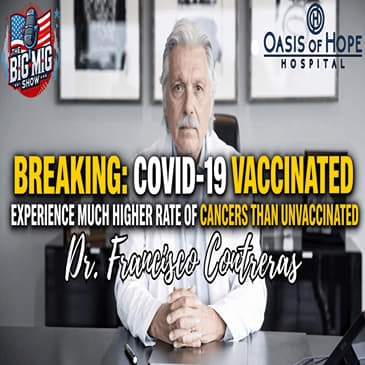
Special Guest Dr. Francisco Contreras from www.OasisofHope.com
HELP SUPPORT OUR SPONSORS,
If you or someone you love is facing cancer, Oasis of Hope offers FREE Zoom consultations for anyone who mentions The Big Mig Show. You have nothing to lose by exploring your options. Visit www.OasisofHope.com right now.”
[00:00:00] All men are created equal, but they are endowed by their creator with certain unalienable rights. By Liberty and the Beauty of Mountain. If Liberty means anything at all, it means the right to tell people what they do not want to hear.
[00:00:33] America, great again. The Big Mig. Well, good morning and welcome back to The Big Mig Show. I'm your host, Lance Migliaccio, with my ride or die co-host, George Valentin. Of course, on this show, it's always edge of the knife, tip of the spear, because if Liberty means anything at all, it means the right to tell people what they do not want to hear. And that is the plan every single episode as we educate and unify the country. It's all about the truth. This is not mainstream media.
[00:01:03] If you're looking to get lied to, you're at the wrong spot. You might want to turn us off now. George Superman Valentin. What's up, brother? How are you, man? I'm good. I'm good. I just got a little head cold. Started, I think, Sunday night. So, you know, I'm going to work through it. Well, you were around a lot of people over the weekend. I always think... No, you know what? It was my barber. I went Friday... Was it Friday morning? Or Thursday? No, Thursday night to get a haircut. He had a cold. I forgot. Yeah. Yeah. That's how it is.
[00:01:32] You get to transfer those germs. He's not getting tipped next time for that. No tip. That's right. If you pass on any kind of bacterial or virus, that's it. You don't get a tip. It's not like I tell them to wear a mask. They're useless anyway. Yeah. Yeah. They're not a big help. Of course, that was the scandemic lie we all heard. We've heard lots of lies. Lots of truths come out. I don't know if there will be any accountability. Seems like Anthony Fauci, no doubt, did a lot of things.
[00:02:01] But of course, there's been a lot of disclosure. I don't know when we're going to get any kind of consequences. We haven't seen that yet. I sure would like to see that in the administration. But of course, listen, if you love the show, the easiest thing to do is smash that follow button, leave a comment. And if you're new to the show, do not be shy. Get in that chat. You're going to have a lot of questions today, as always, when it comes to our guests. We want to hear from you guys in the audience. Because again, if you love the show, that's what it's all about. It's participation.
[00:02:29] And you can follow us here on Rumble, YouTube and Locals on every major podcast platform. Don't forget to catch our nationally syndicated radio show over at Liberty News Radio over the weekends. Well, look, if you like to sponsor the show, it's info at the bigmig.com. We've got a great sponsor and great information. Of course, and I always say this, if you or anybody in your family is struggling with health issues, you've got to go outside the box. You've got to think about what else is available because we know that the system's weaponized
[00:02:57] and the health industrial complex continues to do what it does. There's something truly remarkable that's happening in the world of cancer care just south of the U.S. border. And of course, since 1963, Oasis of Hope Hospitals in Tijuana has been quietly redefining what's possible for patients facing late-stage cancer. Their innovative approach to treating the body, mind, and spirit has produced survival outcomes that far exceed standard American hospital averages.
[00:03:25] And in some cases, these numbers are unbelievable, more than three times higher. Just here's a few. For stage four cancers, the difference is striking. Pancreatic cancer, 25% versus 2%. Melanoma, this is such a big number. 75% versus 24% breast cancer, 75% versus 24%. Of course, prostate for the men, 50% versus 28%. And I think the pattern is very clear.
[00:03:55] Patients at Oasis of Hope often live longer than expected. At the center of this extraordinary story is Dr. Francisco Contreras, world-renowned oncologist who's joining us today for his interview. Of course, author of 15 books. Unbelievable when you think about what it takes to just produce one book. And medical director leading a compassionate team dedicated to giving patients not just treatment, but hope. If you or someone you love is facing cancer, Oasis of Hope offers, now listen closely, this
[00:04:24] is very important, free Zoom consultations for mentions of the Big Mink Show. So anybody that mentions the Big Mink Show, you're going to get that free Zoom consultation. And I think it's so important to do this sort of thing when you are facing health consequences. You've got to go beyond what's available here in the United States because, again, I don't necessarily trust everything they do here. I think they want to treat the symptoms and not the disease. So you have nothing to lose by exploring your options.
[00:04:52] Visit OasisofHope.com, OasisofHope.com. Grab that number. Pass it on to your friends, your loved ones. Get ahead of the curve. Take that free Zoom consultation. You've got nothing to lose and everything to gain. OasisofHope.com. Now, look, a lot of times we have interviews on the show and we do it because we want you guys to have, you know, more information than what mainstream media or what our press here in the United States offers. And that's what we're doing today.
[00:05:21] You know, we're going to be breaking through cancer barriers with Dr. Francisco Contreras. And of course, we've got some crazy information that just broke coming out of Korea when it comes to the COVID vaccine. But he is the medic. He's a doctor. And of course, the director, president, chairman of Oasis of Hope Hospital in Tijuana. He's a surgical oncologist with more than, and listen to this, 60 years in practice. He leads the Integrative Cancer Center.
[00:05:47] His father, Dr. Ernesto Contreras, Sr., founded Oasis of Hope in 1963, trained at the Autonomous University of Mexico in Toluca. And later in surgical oncology in the University of Vienna. He got honors there. He treats cancer as a whole person problem of body, mind, and spirit. And under his leadership, the hospital has cared for more than, now listen to this number. This is crazy.
[00:06:13] A hundred thousand patients from over 60 countries. He's developed therapies such as the impact immunotherapy, I'm butchering it, but protocol available only there. He has written those, like I said, 15 books. The Art and Science of Undermining Cancer, 50 Critical Cancer Answers, The Hope of Living Cancer Free, Beating Cancer, The Coming Cancer Cure, and the list goes on and on and on. He's spoken before the World Conference on Breast Cancer.
[00:06:43] He just got back in the country. He gives seminars all over the world. He's a speaker and well-known, you know, through the oncology vertical there in the medical world. He's a speaker, the Georgia House of Representatives Health Policy Task Force, the Japanese Medical Association, the Medical Health Advisory Board in Slovakia, and the Cancer Control Society. I mean, it's pretty incredible. There's no reason to leave him backstage. We might as well get him in here. We've been waiting to do this interview for weeks. I'm excited about it. Let's get him in here, George. Will do.
[00:07:13] Welcome to the Big Mix Show, Dr. Francisco Contreras. How are you doing, sir? Thank you very much. Doing very well, George and Lance, and it's an honor and a pleasure to be with you. We are really excited, not only at the sponsorship for our show, but, you know, our show is known for doing lots of, you know, medical interviews. We were way ahead of the curve. We got suspended for our ahead of the curve COVID vaccine information.
[00:07:41] And of course, things about the pandemic. We had doctors from all over the world that joined us. We discussed everything from ivermectin and hydroxychloroquine and many other, you know, solutions that now we know were the truth. But of course, truth telling is not easy in the medical world. A lot of times when you're over the target, people, YouTube was infamous for this, and so were many other channels. The suspensions came, even if you were using government facts like VAERS or CDC information,
[00:08:10] which I don't really adhere to. I don't believe in it. But, you know, Dr. Contreras, your father, you have a long history of doctors in your family. Of course, your father started Oasis of Hope. Tell me a little bit, of course, was it right away that your family said, hey, you're going to be a doctor? Or was this something you decided from watching your father? How did it happen for you? It definitely had a big impact that my father was a doctor and I just loved what he was doing.
[00:08:36] And from a very young age, about 12 or 13, I wanted to be a doctor. And follow my dad's footsteps. My father was a very renowned oncologist. He was the director of the military hospital oncology and pathology departments. And he was extremely frustrated with the results. And he came to the conclusion that the problem was more philosophical than practical or technical.
[00:09:05] Because we are taught in medical school to treat the human body as a mechanic treats a car. And never take into account the needs, emotional and needs, and the spiritual needs that patients have, especially when they have a diagnosis such as cancer, which for most people is just a death sentence.
[00:09:29] And so he started treating the body, the mind, and the spirit in the late 50s, early 60s. And the word holistic was coined due to his work treating the whole person. And then, obviously, needed to look for alternatives because the chemo, radiation, and surgery were not giving good results then and they are not giving good results now.
[00:09:54] So there are many alternatives out there with a tremendous amount of scientific support for their use. And in Mexico, the government is a lot more open to natural therapies than in developed countries due to lack of money. So they take into consideration that people do not have access to expensive medical procedures.
[00:10:21] And so natural therapies are allowed in Mexico. And so we're able to do many things in Mexico that Americans cannot do. And unfortunately, Americans have to come to Mexico to do therapies that were developed in America, like high-dose vitamin C was developed at the NCI. The impact protocol is based on dendritic cell vaccines for cancer. And the developer obtained a Nobel Prize in 2011.
[00:10:50] And Americans have to come to Mexico to get those therapies. But fortunately, at least they're available and they are very, very effective. You know, it's always interesting when you talk to a doctor from a different country and you hear about the innovations that are going on. We have a lot of problems here. The FDA, the CDC, and of course, the lobbyists, extremely powerful here when it comes to medical industrial complex.
[00:11:18] A lot of manipulation of the press, as we saw during COVID. We've seen a lot of the information now. We've seen the emails. We've seen a lot of the truth. I don't think there's much accountability coming. Hope for the best. Expect the worst on that. But, you know, you've seen all sides of this. Of course, you, you know, give speeches. You're a speaker from all over the world. You were just overseas. And where were you at? I remember CJ told me, but I don't remember the country. In Finland.
[00:11:45] And we were talking about the possibility of using the immune system as a weapon against cancer. And that's where our experience is. And so there's researchers there and in Europe, especially in Germany, where immunotherapy is a, you know, a major tool against cancer. And so we were sharing information about how to treat cancer through the immune system.
[00:12:15] And I think it's the future of oncology. You know, it's interesting, of course, the medical industry, industrial complex here, they don't really want that sort of thing. I believe that a lot of times, even when it came to ivermectin and how it was attacked during the COVID pandemic, you know, it seems like when a solution has come out here, often they want to try to not disclose it because they treat the symptoms, not the disease.
[00:12:41] There's nothing about spirit, you know, or the mind. Most of it is just pumping people full of drugs that I think in some cases are more damaging. Chemotherapy has been one of them. It seems like it's done a lot of damage to a lot of people. I, you know, Roger Stone, and he's allowed me to say this, you know, he cured, his wife had stage four breast cancer. She's in full remission and has been for many years now, but he used alternative medicine
[00:13:10] to get her healthy again. And that's happened. There's been a major trend on social media. But let me ask this, you know, you have, your family has a long history as a truth teller. The fact that you, and I did not know this until you said it, that the term holistic was coined because of your father. That's pretty unbelievable. You know, have you felt yourself get attacked? Have you felt the pharmaceutical industry and others try to come after you, try to come after Oasis?
[00:13:40] Even the name's interesting, Oasis of Hope. I immediately thought that was a great name because you're giving people such an incredible amount of hope. But tell me, have you guys been attacked? Because here in the U.S., they probably would have come out for you with guns blazing if you were trying to do what you're doing. My father was ostracized and persecuted for years for coming up with new ways of treating cancer.
[00:14:02] In fact, due to pressure from the FDA, his clinic was closed several times in Mexico due to that kind of pressure. But he paved the way for us. You know, we used to be quacks. Now we're alternative doctors, at least. And because of so much information coming out that alternative therapies do have a place in the treatment of cancer, nowadays things are more open.
[00:14:32] We are still criticized. You know, Oasis of Hope was a name given to us by a patient. A patient came from Italy in the 60s, told that he had three months to live. And five years later, he comes with a present for my dad and said, I'm giving you this present, Dr. Contreras, because this is an oasis of hope. And so he's the reason for our name. And hope is a very powerful thing.
[00:15:00] You know, we've been criticized for selling false hope. And so the question is, what is true hope? You're dead. So the truth is there is hope or no hope. And I think it's very important to instill hope in a patient that feels hopeless. And hopelessness is a devastating killer. If you believe that you're going to die, you will die. And doctors will tell you, you know, you have so many months to live.
[00:15:30] But if I give you chemo, you're going to live six months longer. But you're going to lose your hair. You're going to vomit all the time. You're going to feel terrible. And so obviously we need to look for alternatives. And we've shown with statistics that these methods do offer a tremendous amount of hope to patients, like the stats that you were mentioning before. You know, those stats are incredible. You know, you're right.
[00:15:56] Here in the United States, they love to give you the version of the world that the glass is half empty in so many ways when you're facing medical issues. And there isn't anything about trying to psychologically use the mind, which is an incredibly powerful weapon, especially when it comes to the body healing itself. We've seen lots of it. We've heard lots of stories.
[00:16:22] Social media, thankfully, has really disclosed a lot of that. It's really exposed a lot of the truth here. It's exposed a lot of things about the medical industry. And I think so many people here in the United States, they feel lost in the system. Of course, it's driven by the insurance industry, you know, rushing to appointments. The doctors are trying to see so many patients in a very short period of time. And, you know, a lot of the treatments make people just feel worse.
[00:16:51] And, of course, then they get, like you said, they get the determination that you've got a year to live. You've got, you know, Roger's wife was given six months to live. And I think now she's been in remission for, I don't know, nine or ten years now. So it's interesting that so much of that, what they do to patients is so damaging in a way. You know, tell us, let me ask you this. I'm sure over the years you've seen just some incredible recoveries.
[00:17:21] How much of that would you attribute to the mind when you see an incredible recovery that just doesn't seem believable almost, at least believable by the medical industry? Well, I'm convinced that our stats are so much better because of miracles. There are so many times when we just have to attribute that to God when the results are so dramatic that a patient comes riddled with cancer.
[00:17:44] And I don't know if you've ever seen a PET scan, but on a PET scan, the tumors actually light up. And so we've had patients that the PET scan looks like a Christmas tree. And in three months, all of the tumors are gone. And so we're good, I mean, but not that good. And so there's definitely a tremendous amount of miracles. And, you know, HOPE is a well-established functional therapy.
[00:18:15] We do double-blind studies to determine the objectivity of a study. And what that means is that the patients do not know who's taking the placebo and who's taking the drug because your mind can change the outcomes. That's the first blind. The second blind is that a doctor can also influence the results by telling the patient, hey, listen, this is the best thing since popcorn. You're going to be good. And so we doctors can also influence the results.
[00:18:44] And that's why the studies are double-blind. So we acknowledge that hope and the mind's power is tremendous. And yet we do not use it in the medical practice, which is crazy. So we unashamedly brainwash our patients into life. You know, let me ask you this. Give me an example of how you guys do that. Somebody comes in, you determine they've got cancer.
[00:19:14] How do you start right away? What's the process? So somebody comes in from another country, let's just do it for the audience. And they've been diagnosed with, you know, maybe even late stage, let's say, breast cancer. What does the process look like when they show up there in Tijuana? So in my first visit, the first thing that I want to do is to convert my patient from a victim into a victor. Cancer is not necessarily a death sentence.
[00:19:44] And there are many resources that patients have to attack it. And you can live with cancer. You can even beat cancer. And when there is that type of emotional support from a doctor to a patient, then the patient is going to be a much more open patient to treatment.
[00:20:06] And the results are so much better when you instill hope and the possibility of surviving into patients. So that process is that is the beginning of the process of the healing therapy that we have. And then we explain to them that we're going to attack this cancer from many different type of angles by using elements that are going to destroy the tumor,
[00:20:36] but mostly using their immune system to attack their cancer. Because I don't know if you've ever heard this, but somebody that has a perfect immune system cannot develop cancer. We develop cancer because our immune system fails. And we do so many things to distract and destroy our immune system in life, stress, eating junk food.
[00:21:04] There are so many factors. And so all of these things are taught to our patients for them to change their lifestyle, the way of thinking. And then we use all of the elements like hyperthermia, high-dose vitamin C, high-dose vitamin B, B17,
[00:21:24] our impact protocol, which is cell therapy, where we create an anti-tumor task force within the immune system specific for that patient's cancer. And in a nutshell, this is how we work with our patients. And I believe strongly that that is one of the main reasons why our stats are so much better. You know, I want to throw to George for a minute.
[00:21:51] George, we've talked about this on the show, and then I want to throw to you, Dr. Gutierrez. You know, I'm always curious because it seems like some of these things are so obvious. You know, what we put in our body, the stress we put ourselves under, our cortisol levels, and so many other things that impact our well-being. And you would think that that would be part of what the U.S. health industry would try to do to lower their overhead, the insurance companies would try to educate people. But I feel like it's the opposite.
[00:22:22] You know, the marketing campaigns for food, what they do to our GMO foods and the modified foods. George, I feel like this is me, and maybe I'm too conspiratorial. I feel like so much of it is intentional because what you just stated seems like common sense. You would think you would talk about lifestyle choices, stress, you know, using the mind, being positive. But that doesn't happen here.
[00:22:48] They just say, take this, take this, take this, come back and get some chemo or otherwise. I mean, George, are you like me? I feel like so much of the health industry is built around money, and it's not really built about positive results. Common sense. Well, first of all, common sense is not so common. Of course, the health industry. So is the food industry. Their bottom line is profit, how much profit they're going to make and how much they're going to show to their stockholders. So they don't care, really care about us. That's why you go to doctors.
[00:23:18] They just want to give you more meds, more meds, more meds, because they get kickbacks, you know, from the big pharma. It's all just one looping big circle. Keep going round and round. That's why I always tell people, you go to doctor, do your own research. If he wants to give you something, research it. Know what you're getting before you take it, because it could be stuff that you don't need. Like, you take a medication, and all of a sudden you've got to take another medication to combat one of the side effects in the first one. I mean, it's just revolving.
[00:23:48] That's why, look at, Aki, you were talking about vaccines. Look at vaccines in general. So, autism rates, how they spiked in the last, what, 10, 20 years? Versus, you didn't really hear much about autism back when we were growing up. All of a sudden, boom, what changed? Something changed from when we were kids to getting, now with kids, either all the vaccines, all the stuff in the food, a combination of both. I mean, it's crazy.
[00:24:18] The food, you think the food, they just want to, they just want to make money. They don't care what they put. Look at all the dyes they put in food that finally RFK Jr. is getting them to ban it and stop using those dyes. Like, you go to Europe, all that stuff is banned from being put in the food, but it's okay here. How does that make sense? Yeah, it is interesting. And Dr. Contreras, I'll throw to you, you know, the food pyramid here. We talk about, of course, cancer loves sugar. We're aware of that. Simple sugars, the conversion of carbohydrates. We've had experts on our show.
[00:24:48] We talk about, example, ketchup. You go look at a ketchup bottle in Italy. It'll be a very simple set of, you know, materials that are used to make that ketchup. Maybe three, four, five items. Here in the United States, it's this long. Most of the names, you have no idea what they are between the preservers and the rest of it. And that happens so often. If you're checking labels, and I try to check labels. I don't know that I'm perfect at it, but I try to eat relatively healthy. I take lots of supplements.
[00:25:15] You know, how often do you feel like, and this is a comparison because you're all over the world. If you were going to compare the U.S. health industry to so many other locations, because I've heard about some crazy results people have gone to getting treatment in Asia, coming down you to get treatment. Do you think, do you feel like it's almost, you know, a scheme here? Does it seem intentional to you? I know there's some great doctors here. I don't want to just put all the doctors into one basket.
[00:25:45] But when I look at the big picture and some of these things, as you just stated, were common sense concepts, at least they seem common sense to me. For example, our doctors here don't receive a lot of education during, when they're trying to become a medical doctor. When it comes to nutrition and its impact on the body, you have to go to a, you know, somebody here in the United States, like a naturopath to get anybody that has real knowledge and nutrition. Do you feel like there's some intent here?
[00:26:14] Do we have a problem here in the United States as compared to other countries? Wow, that's a loaded question. What I want to let you know, and this is not conspiracy at all, is the system. People have the impression, especially doctors, that if it's FDA approved, it's good. And if it's not FDA approved, it's bad.
[00:26:37] Now, something in order to be FDA approved, you have to prove to the governments that your product is safe and effective. In order to do that, you have to spend on research about $1 billion just to prove to the government that it's safe and effective.
[00:26:58] And then you get a patent to have a monopoly of your invention for about 20 years so that you can make your money back. And not every drug is approved. So the industry spends a lot of money complying with governmental requirements. And then when it's approved, the results are not there.
[00:27:25] They're not very good, especially for cancer treatment, okay? Why is it that there are no natural things? Because you cannot get a patent. That's why the vitamin C protocol that was developed at the NCI never came into clinical trials, because you would do all the studies, prove to the government that it's safe and effective, and then they would approve it, but there's no patent.
[00:27:50] And so that company spent $1 billion, and the next day any company can do it, any pharmaceutical industry can do it. So, and that's not a conspiracy. That's just the way it is. And that's why natural therapies are not studied. But it does not mean that they're not good. One oncologist one day told me, you are using vitamin C, and this is not FDA approved. And I asked him, well, do you eat bananas?
[00:28:19] And he got really bad. And bananas are not FDA approved. No, I didn't realize. So it doesn't mean they're not good. I didn't know they didn't have that FDA seal of approval. Yes. And so that, some, I hope that Bobby Kennedy comes up with an idea on how to incentivize the study of natural things, because they are very good, but it's the system that has to trap them.
[00:28:49] And then the other thing, about 12 years ago, 15 years ago, the insurance companies used to pay for our therapies, because they're terribly cheap in comparison to chemotherapy and radiation. And the AMA sued them because they were paying for non-FDA approved therapies. It's mind-boggling how the system has this bug down.
[00:29:16] I'm not sure that it's intentional to kill people, but something has to change in order for the stats, especially in cancer, to change. And we've proven that they can be changed with very simple changes in how we approach cancer, especially philosophically. Philosophically, right now, it's to destroy tumors. So listen to this.
[00:29:45] You prove to the government that your chemotherapy destroys a tumor, and if the tumor reduces in size, it goes into the books as a success, even if the patient dies, because what you are measuring is what happens to the tumor. So what I tell doctors is that I'd rather have live failures than dead successes. And what I mean by that is that I can treat a patient, the tumor is going to be the same size,
[00:30:12] but instead of the patient dying in three months, he's alive 20 years later, but he's not cured. Who cares? And so we have to change that mentality on how to treat patients for them to be enjoying life, not necessarily being cured and being destroyed in the process of being cured. Hey, Doc, let me ask you a question, because something you just said, like it may have reduced the tumor, but the person still passed away.
[00:30:41] Is it true that like, okay, what one, whatever, whatever, let's say it's an infusion that helped reduce that tumor, but the person still died. Like it may work for some people, but may not work for others. Isn't that true? Like any medicines and stuff? Yes. Yes. Even natural things, that happens. Okay. So the measure is really longevity with quality of life. Yeah.
[00:31:09] Right now, you know, they say that due to medical practices, people are living longer. Yeah, but like you were saying, they're taking 20 medications. Their life quality is terrible. And so you need to add life to those years, not just years to your life.
[00:31:27] And so, you know, I have to agree with you that there has to be, we need to change the way we approach disease overall, but especially cancer. You know, here in the United States are the founders and framers who wrote the original documents for the grand experiment that is the United States. They wanted limited government. Of course, that over the years has not been the case. It's expanded and it's sunk its hooks into everything.
[00:31:54] And then, of course, these powerful lobbyists and foundations, they've manipulated what our congressional members agree to. I've often said that the members of Congress here need to wear a NASCAR jacket with the largest patches representing who they got the most money from. Many of them would have a very large Pfizer patch or maybe a Johnson & Johnson or other medical industry members.
[00:32:18] You know, when I look at the system here, what I want to ask you straight up, because you've had a lot of experience out of the country. You know, you've seen and been to places and you've heard that. Does anybody else struggle with the problems we have here, which I think is a manipulation of the medical system because our congressional members are taking such vast amount of money from that industry? Do they struggle with the same issues we have here? Because when I hear stories, I have some friends that have gone out of the country.
[00:32:47] They've gone to, like, Thailand and other countries, and they were given a death sentence here. And four years later, they're still alive, getting incredible services. Of course, the cost here in the United States, you brought up the R&D that goes into drugs, but the pharmaceutical companies decided that because America had the deepest pockets, they were going to charge us the most for these drugs.
[00:33:09] Our prescription drugs here are absolutely ridiculous in comparison to other countries to the point that Americans are going to Mexico to pick up their insulin, to pick up their other drugs. They're ordering it from India. They're ordering it overseas. And, of course, that's risking itself. You don't know necessarily what you're getting, but the cost is ridiculous. Any drug is so much cheaper elsewhere because, again, they pass it through to us. But do other countries struggle with a medical industrial complex like we do here? Because we seem to be very unique in that.
[00:33:39] No, you're not. The European Union, when it came about, just copy-pasted all of the American FDA procedures. It used to be that Germany was at the forefront of alternatives, but once it became the EU, it just became, the medical practice became Americanized.
[00:34:04] And you have to think it in this way, the rest of the world, when America says jump, you don't say why, you say how high. The rest of the world has very little say in what we do. The big governments are always telling us what to do. Why is it that the cancer incidence is much lower in third world countries?
[00:34:32] Well, because we don't have enough money to kill ourselves. You know, we cannot buy the expensive processed foods that you have, so we have to eat the food the way God put them on this earth. And virtually our poverty has saved us from many, many struggles health-wise. So in rural China, for instance, the incidence of breast cancer is 1 in 100,000.
[00:34:58] In America, it's 150 for 100,000 population. And it's all due to lifestyle. When Chinese women move from China to America and start eating like the Americans, then they have the same incidence of breast cancer than the Americans. So it's not hereditary. Americans don't have the gene of breast cancer. It's basically our lifestyle and the way we do it.
[00:35:25] And you were right, George, when you said that common sense is not common. It's so uncommon nowadays that it's frustrating. You know, with all the, you know, big pharma, right? Or let me just go to insurance companies. You would think because insurance companies, they would do something where they'll buy the meds from India or wherever, where it's so much cheaper instead of buying it from this country and save so much more money.
[00:35:56] Are they obligated to buy it from the pharmacies here? I mean, you know anything about that? Yes, for instance, there are, you know, I'm sure that you've heard the term standard of care. Standard of care is what the medical community believes that is the best for a patient. And it's like a cookbook that you have to follow. But the ones that give the ingredients of that cookbook are the insurance companies.
[00:36:25] So the insurance companies is saying we're going to pay for this and for this and for this according to, you know, the needs of the patient. And if it's not in that cookbook, the insurance company will not pay for it, no matter how good it could be for a patient. So doctors are prescribing to patients the standard of care based on what the insurance company will pay or not. And so those are the things that need to change.
[00:36:56] So we many doctors around the world, we we prescribe many drugs off label. You know, now they call them repurposed drugs like ivermectin. Now, ivermectin has been proven to have pro-apoptotic capacity. Doc, I'm going to hold you there because we've got to take a short break. But that's exactly where I was going to stop. Listen, when we come back, we're going to be talking about and this is the elephant in the room. You've seen it on social media.
[00:37:25] We're going to talk about ivermectin, fenbenzidol, mebbenzidol as cancer treatments. Because, of course, you guys have heard this. You've seen it. You've heard about the parasites. We're going to have Dr. Contreras dig all the way in. So stay tuned while we're on the live break. Take the live link. Share it far and wide. The Big Mac Show will be right back. Stay tuned.
[00:37:58] Something truly remarkable is happening in the world of cancer care, just south of the U.S. border. Since 1963, Oasis of Hope Hospital in Tijuana has been quietly redefining what is possible for patients facing late-stage cancer. Their integrative approach, treating the body, mind, and spirit, has produced survival outcomes that far exceed standard American hospital averages. In some cases, more than three times higher. The pattern is clear. The pattern is clear.
[00:38:27] Patients at Oasis of Hope often live longer than expected. At the center of this extraordinary story is Dr. Francisco Contreras, world-renowned oncologist, author of 15 books, and medical director leading a compassionate team dedicated to giving patients not just treatment, but hope. If you or someone you love is facing cancer, Oasis of Hope offers free Zoom consultations for anyone who mentions the Big Mac show. You have nothing to lose by exploring your options.
[00:38:57] Visit www.oasisofehope.com right now. Forged through rigorous training and honed by the finest instructors on earth. These canine units serve beside our nation's warriors as they fight to preserve what we cherish. When these warriors complete their duty, the Warrior Dog Foundation provides them with a home deserving of the service they've given us all.
[00:39:27] At our state-of-the-art kennels, they receive rehabilitation and care suitable for heroes. Because that's what they are. Be a part of giving them a future today. Visit www.warriordogfoundation.org This is the STAB Sawman Tactical Advantage Blade. Built by former Marine and Navy SEAL Craig Sawman Sawyer.
[00:39:55] In the teams, every ounce had to earn its place. No extras, no excuses. That is why he built the stab. 17 practical tools. No moving parts to fail. CPM D2 tool steel. Hardened to 60 Rockwell. Tungsten carbide glass punch on the pommel. It clips on a belt. It mounts on a plate carrier. Reverse grip or conventional. It stays put. Built for the work. Rain, night, salt, mud.
[00:40:24] Created for adverse conditions. The one he carries now. Grab yours at sawmantacticalblades.com Alright, welcome back to the Big Big Show. Here we host Lance Migliaccio, George Balentine, and our very special guest, Dr. Francisco Contreras from Oasis of Hope. Now, before we left for break, we're going to be talking about ivermectin and premezidol,
[00:40:55] menbezidol. You know, how it works with cancer treatments. If it works, we're going to get the expert advice. But, you know, something just came out this morning. I just seen it. What is it? Bino Tech? They're in Germany. They're closing three factories due to the low capacity utilization and declining demand for mRNA injections marketed against COVID. Gee, I wonder why. Yeah. Well, that's good news. We're going to be talking about a study coming out of Korea later on. It's frightening.
[00:41:25] All right, Doc. You know, we've seen all the people on social media. They're using ivermectin and premezidol. A lot of it's got to do with the belief that we all have parasites and that so many of the cancers originate from the parasites. Of course, not only what we're putting in our body, but the fact that we're not here in the United States. Parasite cleanses are not common. They're kind of like alternative medicine beliefs, although in other countries,
[00:41:55] they're part of the yearly medical, you know, interaction with your doctor. Hey, did you do your parasite cleanses here? That sort of thing. Let's peel back the curtain here. You know, Doc, first of all, are parasites responsible for a lot of cancers? That's not necessarily true, okay? If that was true, third world countries would have the highest incidences of cancer in that first world countries, right?
[00:42:22] Because the amount of parasites, the reason why in America there's no program for removing parasites is because very few people have parasites in America, whereas in Mexico we have to debug our children and our population at least twice a year. And so parasites do not cause cancer, but they do distract the immune system,
[00:42:49] and anything that distracts the immune system opens up the door for disease. Now, having said that, there is absolute proof that these antiparasitic drugs are pro-apoptotic. What is apoptosis? Apoptosis is the shell life of a cell, the caducity or the expiration date that a cell has.
[00:43:14] Malignant cells do not have expiration dates like our rest of the cells. And so when you take a pro-apoptotic product like ivermectin or femendazole or menbendazole, you are inviting that malignant cell to commit suicide. And that's why they have been effective in the treatment of cancer. And this is not a wife's tale idea.
[00:43:43] This has been proven clinically and in the laboratory. And that's why these products may be very helpful in the treatment of cancer. We use them even before the pandemic because of that fact. So, again, getting rid of parasites is a good idea, but that's not the reason why it works against cancer.
[00:44:10] It's because it directly can kill malignant cells. Well, inflammation puts the mitochondria under attack. It puts our telomeres under attack, all that inflammation and the degradation. What do you think? So, we're seeing a lot of people talk about peptides online. There are some peptides that are alleged to improve your mitochondria. First of all, are peptides really common in Mexico, the use by the medical industry?
[00:44:40] Because here, of course, they've tried to ban most of the substances. The FDA doesn't have any approvals. And we haven't seen a lot of it other than a Zempic. We've seen it come with the GLP-1s and GLP-3s that are coming out now. But there's some peptides like SS31, MOTC, others that they say that can really have a positive impact on your mitochondria. Do you guys use peptides there at the Oasis of Hope facility? And do you see peptides being a very common thing all over the world when it comes to the medical industry?
[00:45:08] But, of course, here in the United States, they're talking about them like they're the antichrist. It's so unfortunate. Peptides can be very, very helpful in the treatment of cancer. And you're absolutely right. Inflammation is at the core of all diseases, but especially cancer and heart disease. And if we can control inflammation, you will have much better results. So we're using two peptides.
[00:45:35] We use several peptides in the treatment of cancer. And PVK is a very potent anti-inflammatory drug, almost as potent as steroids, for instance. Without any of the side effects. And so when we measure, we have a way of measuring the inflammatory status of the patients. And when the inflammation status in most patients, it is very high. We start using peptides.
[00:46:04] Now, GLP-1s and all the new ones, they are also very strong anti-inflammatory products. And peptides, you have to remember, they're built up from amino acids. So they are very natural in essence with few side effects. And we also use another one called thymocine alpha-1.
[00:46:31] And thymocine alpha-1 is important for a cancer patient because it counteracts what is called T-cell fatigue. T-cells, like natural killer cells, are the ones that attack cancer and they get tired. And it's been proven that these peptides can improve the fortitude of T-cells, like the checkpoint inhibitors.
[00:46:59] These are targeted therapies, immunotherapies that have been developed in America, very effective. But they're about $15,000 every three weeks. Peptides can do the same for pennies on the dollar. So we promote the use of peptides in the treatment of cancer very strongly.
[00:47:22] And right now, the FDA has not approved many of them. I think there's resistance because they are effective. But since you... And you've got to add, very cost effective because you look at the price of what you get for peptides versus Big Pharma. That's why Big Pharma doesn't want their lobby to not have those approved. I believe that that is true.
[00:47:51] It's really unfortunate because so many, especially cancer patients... What was the... You said the first peptide. What was it? BBK? What is it called again? P as in Paul? P-V-K. And it's a combination of three different peptides. And it's a very strong anti-inflammatory peptide. If someone's not sick, doesn't have cancer, is that a good peptide for someone to take? I think that's too strong.
[00:48:19] Probably a GLP-1 would be more than sufficient. That's why GLP-1s are so big. They not only help you to lose weight, but they bring down inflammation. And patients just... All their parameters improve. Cholesterol, sugar, glucose, the white counts, the red counts. All... Just about everything improves. So I'm convinced that peptides can be very good.
[00:48:47] Now, there are some patients that are going to be allergic to them or will react negatively. And of course, if they have side effects, you have to stop them. But most people tolerate peptides very, very well. Yeah, it's interesting because, of course, you can see it online. You can see the medical industry here has started quite a few campaigns going against peptides
[00:49:14] because people are getting peptides and they're having these amazing results. They're posting it online. They've got their weight under control. Like you said, inflammation is down. Even the effects on the joints. I'm using BP-157 and I'm using the Wolverine stack with PBM-500 copper peptide and, of course, BPC-157 on my shoulder. My shoulder has repetitive damage from a lot of combat sports and a lot of martial arts. So I don't have any... The cartilage has been worn out of the shoulder.
[00:49:44] I have some arthritis because of it. Makes working out a little difficult, but I've been getting some amazing results. And I just heard about a peptide that can potentially regrow cartilage. Don't know if it's accurate. I just heard about it yesterday. And that's what's happening. People here in the United States are doing their own treatments and having results. I don't think without those peptides, I'd be able to work out hard right now like I am. Of course, still push movements are tough like shoulder presses and chest. I can't go real heavy anymore like I used to.
[00:50:11] But it's really interesting because some of the things that you're stating here on the show are so different than the United States currently. You know, everybody talked to me. You know, Ivermectin and horse paste. You know, man, it doesn't... And they don't want to talk about any of those drugs or any of the Nobel Prizes that were won or any of the impact of them being used for decades around the globe. Let's talk about AI for a minute. You know, we've seen a huge trend here.
[00:50:40] The people are coming out of their doctor's office. They're taking whatever the doctor told them. They're pumping it into AI and they're getting information. The doctors here in the medical industry in the United States is not very happy about it. Most of the doctors feel like AI ignores the experience of a doctor. I agree with that. But it's somewhat of a blessing and a curse. What's your experience with AI in the medical field?
[00:51:04] What do you think as far as patients coming in with sheets of stuff they printed off or questions they have? Do you think it's helping patients or do you think it's having the opposite impact? I used to tell my patients that information was paramount in order for anybody to make a good decision. But right now, there's so much information that most patients are very confused. And doctors can get also confused.
[00:51:31] But overall, I think that AI is going to be very, very helpful. For instance, right now we're doing all the research to use some interleukins in the treatment of our patients. And what used to take me, let's say, three weeks to research and gather all of the paperwork, now it's in 10 seconds.
[00:51:57] And it's a time saver of incredible value. But I can understand that there's some reluctance. In interpreting x-rays, for instance, doctors have a 15% error margin, positive or seeing something that it's not there or not seeing something that is there.
[00:52:25] And so that's very bad for a patient. AI, I think, is going to raise that 15%. And that's a little bit scary to a doctor. You know that a machine can interpret that for you. I think that all developments have always been with the pros and the cons, right? And we just have to be judicious and use it wisely.
[00:52:56] But overall, in my experience with technology, and I'm 74, and so I've seen many, many advancements. Overall, they're positive for humanity. And I believe that AI is going to be good. At the beginning, there has to be some adjustments, and we have to know how to use it. But I think that it's going to be very positive in the medical field
[00:53:25] because of the amount of the time-saving element of research is just staggering. You know, a gentleman used his dog had cancer, was given a very short-term diagnosis for quality of life and life. He wouldn't accept that. He took AI, and he created a vaccine that was specific to his dog's DNA and the cancer it had.
[00:53:53] And the dog's in full remission now, even after the veterinary world said, no, your dog's going to die. He took it upon himself to do it. It's a crazy story, pretty unbelievable. He was able to customize some sort of immunotherapy for his dog and cure his cancer. I don't know the results of the dog now. I haven't followed up on the report. But let's talk about when I got that, when CJ sent this over to me, of course, I cringed. We were lucky enough to get ahead of the curve.
[00:54:22] George and I did not take the COVID vaccine. We were able to convince most of our family members. We weren't successful 100% across the board, but we had so many experts on the show, and that probably led to our suspension. Probably led to the attacks online between that and election interference information we put out. We got suspended on numerous platforms, including X, which was back then Twitter. Let's talk about this report coming out of Korea.
[00:54:56] This was a study of 8.4 million adults with a one-year follow-up and the overall cancer rate increase in one year. These are some crazy numbers, and we've heard a lot of reports and a lot of discussions with doctors we know here talking about turbo cancer here in the United States, that there seems to be a much higher incidence of what they're calling turbo cancer, something that's never happened before.
[00:55:23] And not, the profile is interesting because it's not, you know, normally cancer seems to be an older person disease, or it has been historically, and that seems to be changing. You know, tell me about this report, because this is horrible. I mean, this is some serious stuff here. You know, I'm not sure what to think of this, other than, you know, I hate to say it, but I'm going to say I told you so. I was very uneasy about the experimental vaccine, and now we've got this.
[00:55:52] And, of course, they would never probably put this out in the United States for many reasons. What are your thoughts here on this, Doc? I don't know how on top of this report... Well, like you, we promoted many... I'm sorry about that. I don't know how to turn it off. Got to echo, right? Sorry. Sorry about that. Yeah, that's right. We promoted the use of ivermectin as a preventive for COVID
[00:56:20] here at the hospital, and we did a long study. Most of our people, like you, we did not get the vaccine. What I can tell you is two things. We definitely have experienced these turbo cancers right now. About half of our patients are less than 40 with very aggressive cancers, and there's no question that it sends the vaccine.
[00:56:47] So, this report, I'm going to look it up because it's new to me. The other thing that I noticed is that patients that were doing extremely well with our therapy got vaccinated, and their cancers reactivated in a very aggressive way. So, to me, there is no question that there's a relationship between the COVID vaccines
[00:57:10] and these turbo cancers and the reactivation of cancers in patients that were doing otherwise well. Now, until this report that I have not read, it was, you know, just a relationship, but not a causative agent. But apparently, this report is pointing to causal agent, the vaccines being the cause of this.
[00:57:40] And this is very interesting. Till now, we were not allowed really to say that. But in my experience, there is definitely a relationship between these turbo cancers and vaccinated young people in comparison to before that, where most of our patients were 60 years or older, and now they're 40 years or younger. I have a question for you because we're talking about vaccines.
[00:58:07] So, Russia's, I don't know, I think they're in stage two trials with their cancer vaccine. When Moderna and Merck came out with their study on their cancer vaccine, you know, you have any knowledge about these vaccines or any input? Well, they are, you know, to prevent. And I'm not sure that that is possible because cancer is so multifactorial.
[00:58:33] And there are so many differences between, let's say, breast cancer and colon cancer. It's like two different worlds. And so, genetically, I don't see how you can prevent cancer of the breast and cancer of the colon with one vaccine. So, I'm a little bit reluctant to that, but I'm open. I mean, there are some very intelligent people out there working with immunology.
[00:59:00] You know, we have, our immunology protocol has developed tremendously in the last four or five years because there's so much information out there that is so positive. CAR T cells, I think, are the future in immunology, and we're working on that here in Mexico as well. So, I have an open mind for that.
[00:59:24] You know, some of these numbers on this Korean study, lung cancer, 53% higher in the vaccinated. Prostate cancer, 69% higher in the vaccinated. Thyroid cancer, 35% higher in the vaccinated. Gastric stomach cancer, 34% higher. Wow. Colorectal cancer, 28% higher. Breast cancer, 20% higher. Some ugly numbers, and we've had experts on the show that talked about the, you know,
[00:59:51] so many things that are in the vaccines that don't seem to really shouldn't be there. Benzene sheeting. There's lots of people that have looked at these self-assembling nanoparticles. And, you know, I always question why is all that crap in there? And nobody seems to really know the answer because there seems to be a lot of things in there that many experts from around the globe think there's no reason for it.
[01:00:14] But it's interesting in this study that women, 48.4% cases per 10,000 vaccinated versus 38.2% for 10,000 unvaccinated. And the numbers, like you said, for these lower rates, the men had higher rates of gastric and lung cancer if they'd taken the vaccine. The women had higher rates of thyroid and colorectal cancer. So this is big stuff. I'm not sure you get a chance to look at it.
[01:00:46] So what do you think about the boosters now? You know, they're saying that it caused higher rates if you had the initial shot and then you got the booster, your numbers even went up more. I would stay away from those so-called vaccines. They're not vaccines at all. They're drugs. They have nothing to do with how a vaccine is made.
[01:01:13] And they just gave that name to protect themselves from being sued. So my recommendation is to stay away from those vaccines completely. All right. Let me give you something else that just came out. You may be familiar with this one. You may not. I guess there's a study, and you mentioned vitamin C in your treatments earlier. There's a study out now, and I've got a short clip we can play. But it talks about topical vitamin C and using DMSO.
[01:01:42] And they're saying that it completely eliminated 56% of biopsy-confirmed skin cancers in just 12 weeks. 44% of the squamous cell carcinoma lesions shrank by over 85%. And 94% of the patients were able to avoid surgery by using this protocol. They say the average cancer lesion size dropped by 71%.
[01:02:07] And I've heard some stories online, and we've seen the pictures of people treating their cancerous lesions with ivermectin. Let's play the clip, and then I want to get your input on this, Doc. This study is crazy. Topical vitamin C in DMSO was able to completely eliminate 56% of skin cancers in just 12 weeks.
[01:02:31] So they got like 17 patients with squamous cell carcinoma in situ, which basically means these cancerous lesions on the skin that are still confined to the skin. They applied it twice a day for 12 weeks directly onto the skin cancer lesions. And literally 56% of all the lesions in the study were completely eradicated.
[01:02:58] And 44% of the lesions shrank by over 85%. And 94% of these individuals were able to avoid surgery. So this is very, very promising. The DMSO was primarily used as a skin penetrator to help push the vitamin C inside of the skin cancer lesions,
[01:03:24] which appeared to have effectively killed the cancer cells or was a combination of the activity of both DMSO and vitamin C. Now we got to do larger randomized trials to confirm this. But in the meantime, this seems to be much better than undergoing surgery. Give me your thoughts, Doc. I don't know if you're familiar with this.
[01:03:50] Well, we used DMSO for a very long time and we changed it to another type of proteolytic enzyme just because of the stink. I don't know if you've ever heard of DMSO, but it stinks. I've used DMSO before. Yeah. But there are other enzymes. So basically our therapy is what this is, what they were talking about, a combination of proteolytic enzymes with very high dose vitamin C.
[01:04:14] For all tumors, skin cancer is not as common here in Mexico as it is in America. But they're talking about squamous cell carcinoma. That's not like the typical skin cancer that you get by exposing yourself to the sun. This is a very aggressive type of cancer. And those numbers are just staggering. And in medicine, when you have a 10% impact, that's when you're talking about a breakthrough.
[01:04:44] These guys are talking about more than 50% results. It's amazing. And I think that, you know, these, we all should be open to these things for our patients instead of surgery and radiation. And if you're going to suffer the stink for a few weeks, well, then suffer the stink and do a therapy like this. It sounds very promising to me.
[01:05:13] So, Doc, I'd like to do this. We talked about your interview quite often through the month and that you could provide some information. You know, I'd like you to just, you know, here in the United States, our food supply seems to be under attack. We're dealing with GMO. We're dealing with the processing. Of course, everything's fast, fast, fast. You know, the snack pyramid is what they push here. You know, eat chips, eat this, you know, eat processed meats, this and that. And, of course, you just pointed out that in other countries, they can't afford all this processed garbage. Good for them.
[01:05:43] That's why their cancer rates are lower. I was hoping that you could touch on and give the audience some life-changing advice that you give patients. Because everybody wants to be preemptive. At least I think you should be preemptive in life. You should be preemptive when it comes to your health. Get ahead of it. Don't wait till you get cancer. Make lifestyle changes now.
[01:06:02] So with your decades of experience and your dad's decades of experience, one of the most important things that our audience that doesn't have cancer should do right now to improve the quality of their life and hopefully stop the possibility of getting so many different cancers. What can they do nutritionally to change in their own kitchen, in their own lives that you know, like, hey, if you're doing this, you need to stop this right now.
[01:06:30] Or if you start this right now, I don't care whether it's doing something in the morning. It's maybe your intake of water. Whatever it is, give them some of those sound bites of what you provide people as a preemptive strike on how not to get cancer. I'm going to give you three tips on how to reduce significantly the possibility of you developing cancer without having to spend any money or very little money at all.
[01:06:57] The first one, there's about 100 studies that show that if you increase the consumption of vegetables and fruits by five portions a day, you will reduce the chance of getting cancer by 50%. Wow. Even if you do not make any changes in your typical diet, imagine that.
[01:07:22] So if you increase the amount of fruits and vegetables and get rid of junk, you are going to reduce significantly the possibility of developing cancer. The second tip is exercise. People that exercise four hours a week reduce the possibility of developing cancer by 50% again.
[01:07:49] So in walking a half an hour a day briskly is more than enough. The more exercise you do, the better it is going to be for you, except if, you know, running marathons and that, we were not designed for that. But any type of exercise, going to the gym, playing tennis, four hours a week is not that much. And the third one is to be spiritually strong.
[01:08:18] We respond to life with emotions. And our emotions are going to be constructive or destructive depending on how spiritually strong you are. And so reducing stress is very, very important. So if you're spiritually strong, if you do exercise four hours a week, if you increase the amount of vegetables and fruits that you consume a day, you are going to reduce the risk of developing cancer.
[01:08:48] And this is something that just about anybody can do. In my book, The Art and Science of Undermining Cancer, which you can get for free if you visit our website, oasisofhope.com, I give a lot more information on lifestyle changes to prevent cancer that are very, very effective. And I hope that you take note of this because it can change your life.
[01:09:16] And it doesn't matter how old you are. As soon as you can start, the sooner that you will get the benefits. You know, and I always say that, you know, making preemptive choices, you know, taking care of things before you end up with a problem. And, of course, oasisofhope.com. So if you mention The Big Big Show and you are facing cancer, a friend or a loved one is, of course, you can get that free consultation. Now I hear about the free book. We should talk about that.
[01:09:44] I should get some information from CJ because I think that anything that can preemptively help people in that interaction. So you heard you go to the website and get the free book and get the free consultation. And making these choices early on, maybe you'll never face cancer. Maybe you'll be one of the lucky ones because, of course, you want a long, quality of life. You want to be there for your loved ones, your children, your grandchildren. But faith is such an important part. On this show, we always talk about God, country, and family.
[01:10:09] Having faith, being positive, it's easy to get into a cycle of negativity. That raises your cortisol. When you cause inflammation, those telomeres start to degrade. You impact your life in so many ways. You have to think preemptively, you know, eating the right way, taking care of yourself, exercise. George, we've mentioned this many times about, you know, having a well-rounded life on this show.
[01:10:39] Well, I always say mind, body, spirit. First, you get your mind right. Then you get your body right. And with those two, you can get your spirit right. I live a very spiritual life too, Doc. So, like, I meditate first thing in the morning. And I believe it's a big way to start your day off right and not let things in life bother you so much. You know, like you used to get, like, people, I see people in traffic or someone cuts you off. They get all crazy.
[01:11:09] I don't let that stuff bother me. That's, the person that's doing all that craziness is the one that's having a bad day, doesn't know how to deal with it. I mean, I'm just happy-go-lucky. Amen to that. Amen. Yeah, there's no, there's no, there's no real reason for road rage. You're going to get there. You know, don't, don't get sucked in. And, of course, social media is one of the worst, the negative news and the negative thoughts. You have to just not get sucked into people's vortex of negativity.
[01:11:37] You know, we get attacked for a lot of the truth we tell on this show, and that's part of it. But the truth matters. It's going to change your life. And that's what Oasis of Hope.com is all about. And Dr. Contreras. And Dr. Contreras, let's share the social media for you first, personally. So people, I'm sure you post a lot of great information. Where do they find you personally? Where's the best place to find you? And where can they buy all your books? Are you on Amazon, Barnes & Noble? Where do you have all your books up?
[01:12:04] I'm sure that you can find them in Amazon. And many bookstores will have them. But this latest one is a compilation of all of those 15 books that I wrote. Can you hold that up again for the audience? Hold that book up again so they can see it. You can get it for free. You can download it for free. If you want to help out and buy it, I appreciate that.
[01:12:28] But the information was so important for me that I decided to put it up for anybody to download it for free on our website, oasisofhope.com. You know, that's amazing. And God bless you for that. Making a difference in people's lives, not only at Oasis of Hope, but just in general. The fact that you can download the book for free. Of course, if you want to support Dr. Contreras buying, it's the best way to do it.
[01:12:53] You know, saying thank you for his decades of research, hard work, investigation, and of course, making a difference in people's lives. So pass this information on. Make sure you take this episode live link. Share it on your own social media. Share it with any of your family members. Get ahead of the curve. And if you are facing the consequences of cancer, here's an opportunity. This isn't medical advice. I'm not a medical expert, but Dr. Contreras is. If they're facing these issues, pass it on.
[01:13:23] Let them know. Tell them the Big Ming Show sent you. Get over there. Call in for the free consultation. Could be a life-changing moment. You know, you might turn everything around. You might put your cancer into remission. You might extend the quality of life because, of course, you want to spend as much time with your loved ones. You don't want to leave this planet without having every opportunity to maximize your time with your children, your grandchildren, your husbands, your wives. So we appreciate it. Dr. Contreras, first of all, I know how busy you are. Thanks so much for coming in.
[01:13:51] First of all, thank you for the sponsorship of the Big Ming Show. We've had quite a few people already tell us they've called down there for the free consultation. I don't know what the response has been from your staff, but we've had quite a few people. They come into our DMs or they come into our email and tell us, hey, yeah, I called them. And it's really helpful. Thank you. They appreciate this kind of stuff. And I want to get you on here regularly. Hopefully, we'll get you back in here. And those tips you just gave people are incredible. 50% cuts just by minor lifestyle tweaks.
[01:14:21] Pretty unbelievable. All right. Don't forget, OasisofHope.com. And you can find them on social media. Let me give you the right handle here. I don't want to blow this. It's a little different. Hang on a minute, guys. And George, anything else you want to share? Anything from the audience? No. We're good, I think. Okay. Hang on a minute. I want to give you this. This was a valuable show right up my alley. Thank you, Dr. Contreras. Well, thank you very much for having me.
[01:14:50] Yeah, that's from the audience there. So IG, you can find them at Oasis of Hope Hospital. Same thing for Facebook. And on X, it's Hospital Oasis. So if you want to go give them a follow, it's a great idea. And, of course, OasisofHope.com. All right. Well, listen. It's God, Country, Family. You know what it's all about here. We're always truth tellers on this show. Take the short form. Take the long form. Grow your own social media. Change people's lives. Educating and unifying is what it's all about. Because, you know, the division and chaos, you've got to ignore it.
[01:15:20] The hateful rhetoric online, don't let it get inside you. Keep your spirit strong. George, last words on our way out of the gate, brother. Well, y'all have a blessed day. It's what? Tuesday, right? Yeah, Tuesday. Any questions, you can always just email us to. Info at TheBigMig.com. And we can always pass them to the doctor. Anything. So live healthy. Like the doc was saying, get spiritually right. We'll catch you guys tomorrow. Love you. Peace. Peace.
[01:16:11] Peace. Peace. The pattern is clear. Patients at Oasis of Hope often live longer than expected. At the center of this extraordinary story is Dr. Francisco Contreras, world-renowned oncologist,
[01:16:42] author of 15 books, and medical director leading a compassionate team dedicated to giving patients not just treatment, but hope. If you or someone you love is facing cancer, Oasis of Hope offers free Zoom consultations for anyone who mentions the Big MIG show. You have nothing to lose by
[01:16:59] exploring your options. Visit www.oasisophope.com right now. Forged through rigorous training and honed by the finest instructors on earth, these canine units serve beside our nation's warriors as they fight to preserve what we cherish. When these warriors complete their duty,
[01:17:25] the Warrior Dog Foundation provides them with a home deserving of the service they've given us all. At our state-of-the-art kennels, they receive rehabilitation and care suitable for heroes because that's what they are. Be a part of giving them a future today. Visit www.warriordogfoundation.org.
[01:17:50] This is the STAB Sawman Tactical Advantage Blade, built by former Marine and Navy SEAL Craig Sawman Sawyer. In the teams, every ounce had to earn its place. No extras, no excuses. That is why he built the STAB. 17 practical tools, no moving parts to fail. CPM D2 tool steel, hardened to 60 Rockwell.
[01:18:15] Tungsten carbide glass punch on the palm. It clips on a belt. It mounts on a plate carrier, reverse grip, or conventional. It stays put. Built for the work. Rain, night, salt, mud. Created for adverse conditions. The one he carries now. Grab yours at sawmantacticalblades.com.